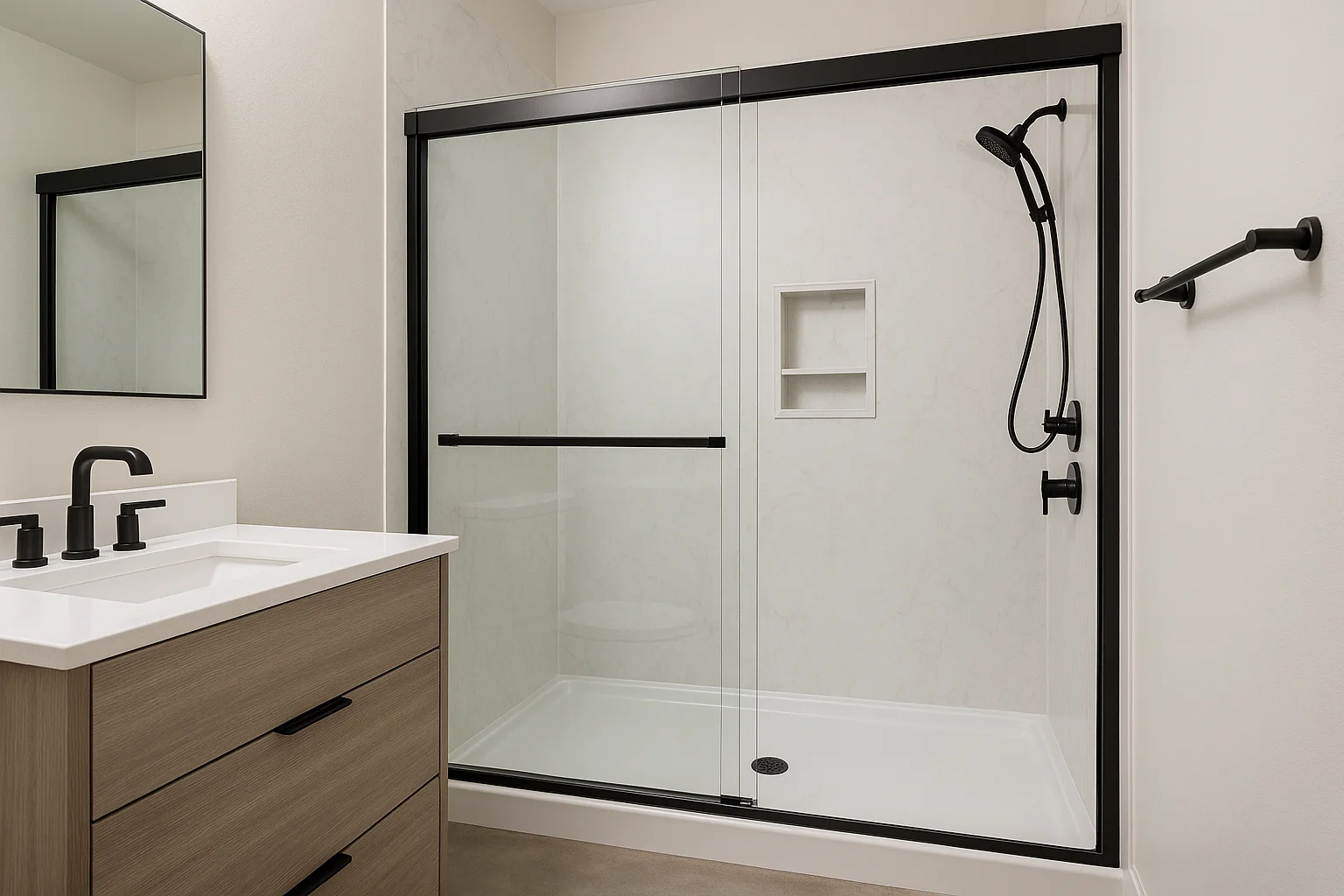
PVC vs Acrylic Shower Panels: When Planning a Shower Remodel, One of the Most Important Decisions You'll Make Is Choosing the Right Material for the Shower Walls. It Affects the Look of the Room, the Resale Value of Your Home, and — Especially in Our Humid Florida Climate — How Easy the Shower Is to Keep Mold-Free.
The three most popular choices for shower walls today are acrylic, PVC, and solid-surface, and each has its own strengths depending on your budget and goals.
At Academy Construction LLC, we’re full-service remodelers serving Gulf Breeze, Navarre, Pensacola, and Milton. We handle all aspects of bathroom remodeling for master bathrooms, hall bathrooms, tub to shower conversions, zero threashold walk in showers and more, offering grout-free, mold-resistant bathroom and shower remodeling services. Here’s our breakdown of all three shower wall systems, based on what we actually install and see hold up over time.
Acrylic Walls: Inexpensive, shiny, and easily scratched/damaged
Acrylic shower panels are inexpensive and for budget conscious projects, acrylic is a good option.
Benefits: Acrylic is waterproof, low cost, and for someone looking for a mold free shower who is on a budget, it fits the bill — and many of the most common questions about acrylic and other wall systems are covered in our bathroom remodeling FAQs, including grout-free showers.
Common uses: Guest bathrooms that aren’t used often, and remodels/flips that need a quick turnaround.
Trade-offs: Acrylic comes in large, relatively thin sheets. Acrylic scratches and damages much more easily than PVC, Solid Surfaces, Composite Materials, or Stone.
PVC Shower Walls: Waterproof, Budget friendly, Appealing stone like look
Benefits: PVC [polyvinyl chloride] shower panels and pvc wall panels are naturally 100% waterproof, with strong moisture resistance that helps with waterproofing and resistance to mold and corrosion, and they’re lightweight, easy to install as shower wall panels for a diy bathroom renovation with standard carpentry tools. It comes in a wider range of design options, including patterns and natural-look finishes that can create a tile or stone effect without the grout, and it’s typically the more budget-friendly option of the three while thicker panels can add a bit of insulation on moisture-prone walls — leaving more budget for grout-free shower upgrades elsewhere in the room.
Common uses: pvc panels are a smart fit for budget renovations, diy renovators, secondary bathrooms, and quick rental-property updates that just need a clean, modern style with bathroom wall panels that stay low maintenance with little more than a damp cloth.
Trade-offs: PVC feels noticeably lighter and more “plastic” underfoot and to the touch than acrylic or stone / solid surfaces, and low-quality panels can show wear sooner in high-use bathrooms or dent or puncture if struck hard by a heavy object, so performance matters most in areas exposed to heavy daily use. For a luxury primary bathroom, it’s usually not the top choice compared to the longevity of solid surface.
Which Material Do Buyers Prefer?
Solid-surface systems are the top-tier choice for homeowners who want a seamless shower built to last decades. It’s also the material we recommend most for handicapped and accessible showers, thanks to its durability and slip resistance.
Benefits: Panels can be seamed together so they read as one continuous surface — no grout lines, which means less opportunity for mold. The material itself is thick (¼”–½”) and dense, so it feels substantial rather than thin. Scratches can be buffed out, and it can be custom-routed to fit curbless showers, niches, or benches.
Common uses: Primary bathrooms in higher-end homes, walk in showers, zero-threshold/roll-in showers.
Trade-offs: Solid surface costs more upfront. In our experience, it clearly outlasts the home’s other finishes, which makes it one of the better investments for resale value, and some homeowners still prefer professionally built tile showers with proper waterproofing when they want a different aesthetic.
Solid-surface wall systems are the most desired, the luxury top-tier choice. It is non porous, is grout free and will not mold. Solid surface shower walls lasts the longest and are the most stone like. It is made from actual crushed stone. This is the material we recommend if you are not on a razor-thin budget, and you can see how it looks in several of our completed bathroom remodeling projects with solid-surface showers.
What Can You Expect to Spend?
Costs vary by bathroom size and layout, but here’s an in depth way to think about the three materials relative to each other:
Acrylic is a mid-range option that typically costs about $380-$442 — a good fit for rentals or secondary bathrooms where waterproof function matters more than premium looks and the fact that it can scratch easily is not as important a factor.
PVC is the more budget-friendly option and typically costs about $149-$179. It is usually 1.5x–2x less than acrylic panels, making it a solid middle ground for durability without paying a stone-level premium, and pairing PVC walls with the right sliding, pivot, or frameless shower door style can still create a clean, modern look.
Solid surface (crushed stone) generally runs 1.5–2x the cost of PVC. You’re paying for longevity and resale equity, which is why it’s the standard choice for high-end primary suites and a popular upgrade in our full-service bathroom remodeling projects.
Side-by-Side Shower Wall Material Comparison
Feature | ACRYLIC | PVC | SOLID SURFACE |
|---|---|---|---|
Cost | Mid-range | Budget-friendly | Premium |
Durability | High | Moderate High | Very high |
Appearance | More refined, polished look | Good / Moderate with a wide range of design options | Excellent |
Install speed | Fast | Fast | Medium |
Scratching / Damage | Easy to scratch / damage | Hard to scratch / damage | Extremely hard to scratch / damage |
Maintenance | Very low | Very low | Very low |
Best for | Buyers wanting a more polished finish | Budget renovations and secondary baths | Primary baths, high-end |
Is it “worth it”?
When someone asks, “Is this xyz product worth it?” that question is often too broad to answer clearly. “Worth it” can mean several different things at once. It may mean: Is the product objectively superior? Is it priced fairly compared to alternatives? Is the better product worth the amount of extra money? Is it affordable for this specific person? How much longer will the better product last? Does it solve the buyer's actual problem better than the cheaper option?
So a better question is not simply, “Is it worth it?” A better question is: “Is this product meaningfully better than the alternatives, and is the difference in quality, it’s visual appeal, resistance to damage, how long it is likely to last, or the enjoyment it will bring enough to justify the higher price and specifically the amount of the higher price for this specific buyer?”
Keeping Each Material Mold-Free
Both Acrylic Panels and PVC Panels are completely waterproof, grout-free wall panels, so maintenance is easy and cleanup stays simple, but proper installation and sealing still matter for long-term performance.
Acrylic: Clean with non-abrasive liquid cleaners like dish soap or vinegar to protect the gloss finish in a wet area application. Avoid scouring pads and bleach, which can dull the surface, and these gentler cleaners help preserve that glossy look over time. A quick squeegee after each shower keeps it looking new for years and supports the installation process by reducing buildup at joints and edges.
PVC: Wipe down with a damp cloth and mild soap, which is one reason these low-maintenance bathroom wall panels are popular after installation. Avoid hair dyes and harsh solvents like nail polish remover, which can stain the surface, and keep an eye on the seams where panels meet; our company mission centers on long-term value and low-maintenance solutions, which is why we often recommend PVC in the right situations.
Solid surface: Standard household cleaners are fine. Stubborn stains or light scratches can be buffed out with a Scotch-Brite pad — it’s the only one of the three that’s truly renewable in this way.
Which Material Is Best for You?
Choose acrylic if you want a more polished look and an easy-to-clean surface, but keep in mind acrylic panels usually need a backboard and, while they’re still easier to install than traditional tiles, they require careful handling during installation because of their weight and rigidity — many homeowners prefer to have a professional bathroom remodeling team handle this work rather than doing it themselves.
Choose PVC if you want a budget friendly option that is a perfect fit for cost-conscious projects, since PVC panels can be cut quickly to fit specific dimensions, installed with standard carpentry tools, and often fitted over existing tiles; whichever material you choose, proper installation and sealing are important for long-term shower wall performance.
Choose solid surface if you want a luxury, seamless shower that’s has a premium look and is extremely long lasting, and if you’d like to know who will be working in your home, you can learn more about our bathroom remodeling experts and installation team.
Get a Free Quote for Your Shower Remodel
Ready to upgrade your home? Academy Construction LLC offers free estimates for homeowners across Navarre, Gulf Breeze, Pensacola, Milton, and beyond.
Contact us today** to schedule your consultation and discover which wall system is right for you!**