

Porcelain Slab Shower Walls: Cost, Pros & Cons (and Resale Value in Florida)
Quick Answer: Are Porcelain Slab Shower Walls Worth It?
Porcelain slab shower walls are large-format porcelain panels-often covering an entire shower wall in one or two pieces-that replace traditional tiles and their many grout lines. In 2024–2025, installed costs in Northwest Florida typically run $45 to $110 per square foot depending on slab quality and job complexity. The main pros: extremely low water absorption, almost zero grout to scrub, and a high-end, luxurious appearance that holds up in Florida’s humidity. The main cons: higher upfront cost and the need for skilled installation. This article answers a straightforward question: what do porcelain slab shower walls cost, what are the pros and cons, and how could they affect resale value in Florida?
Homeowners who compare grout-free options like mold free showers Sentrel panels will find porcelain slabs occupy a similar low-maintenance space but deliver a harder, more scratch-resistant surface with a more authentic stone look. In the Gulf Breeze, Navarre, and Pensacola market, buyers increasingly see a porcelain slab shower as a modern, move-in-ready upgrade. Installing porcelain slab shower walls creates a modern aesthetic that helps a bathroom renovation recoup more at resale than a dated fiberglass surround ever will. Academy Construction, a locally owned remodeler serving the Pensacola Bay area, installs porcelain tile showers and grout-free systems-reach out for a free in-home quote to compare options side by side.
-
Installed cost: roughly $45–$110 per square foot in NW Florida
-
Low maintenance and strong mold resistance thanks to minimal grout lines
-
Porcelain slab showers typically provide a high-end look that appeals to buyers
-
Not DIY-friendly-proper installation by an experienced installer matters
What Is a Porcelain Slab Shower Wall?
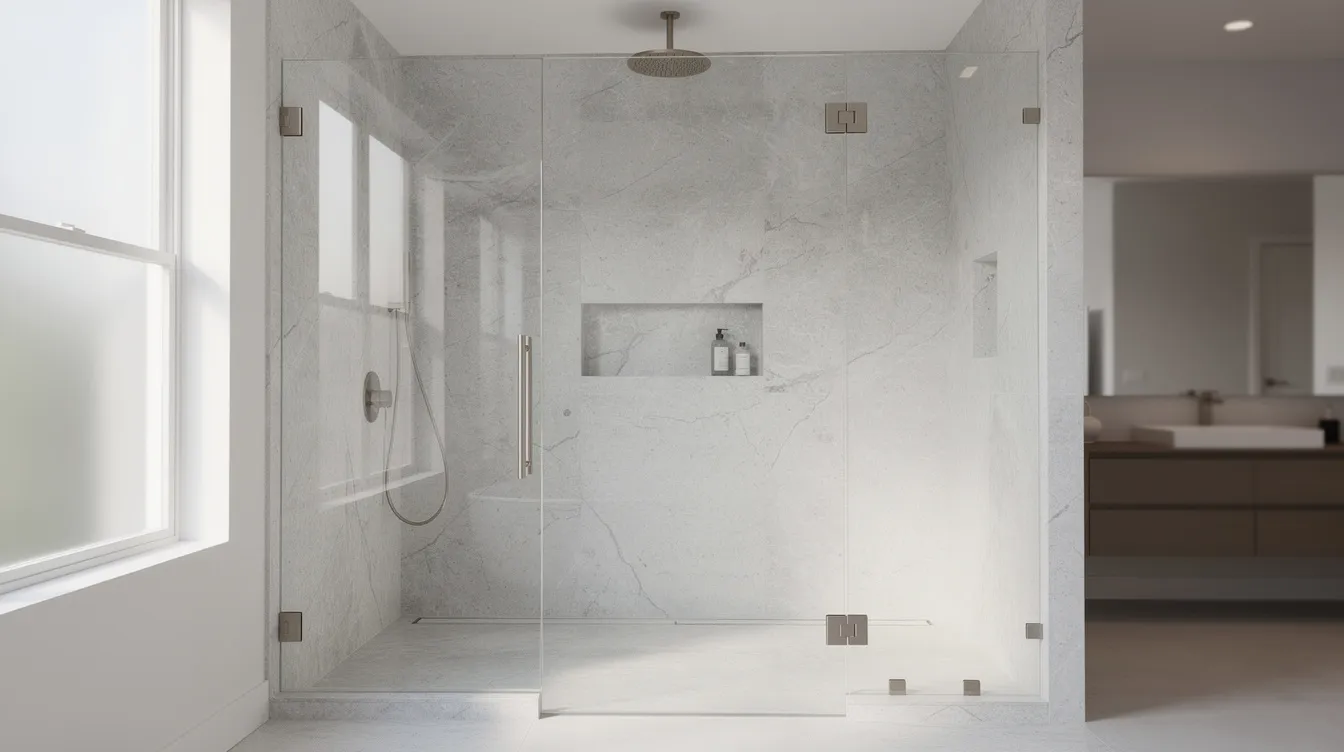
A porcelain slab shower wall uses large, thin panels of gauged porcelain instead of dozens or hundreds of small porcelain tiles. These large format porcelain panels can measure up to 5×10 feet, covering an entire shower wall with one or two pieces and dramatically reducing seams. Porcelain slabs create a seamless, grout-free look for shower walls that standard tile simply can’t match.
The material itself is the same clay-based, high-fired porcelain you find in porcelain tiles-but the format changes everything. You get a continuous surface with elegant veining or texture that flows unbroken across the wall. That visual continuity is why so many homeowners choose porcelain slabs for a bathroom renovation when they want a clean, seamless style.
Beyond the shower, slabs work as a feature wall, tub surround, or matching vanity surface. Some homeowners use them on kitchen countertops or fireplace surrounds to tie rooms together. Wall panels are typically around 6 mm thick, which keeps weight manageable on properly backed framed walls.
-
Large slabs mean fewer seams compared to traditional tiles
-
Porcelain slabs offer a continuous surface with matched patterns
-
Unlike natural stone, porcelain requires no sealing
-
Fiberglass units install fast but lack the durability and aesthetic appeal of slab
How Porcelain Slab Showers Are Made (and Why That Matters)
The manufacturing process starts with dense clay-specifically refined kaolinite-mixed with silica and feldspar. This mixture is pressed into large format slabs and fired at extremely high temperatures, typically above 2,200°F. That intense heat vitrifies the body into a non porous surface with a water absorption rate of 0.5% or less. Porcelain is fired at high temperatures, and that’s what makes the material incredibly durable and resistant to moisture damage in a wet environment.
Modern digital printing and glazing create perfect porcelain slabs that replicate natural marble, limestone, concrete, or even wood grain patterns with startling accuracy. The surfaces are UV-stable and stain-resistant-a real advantage in sunlit Florida bathrooms. Because the pattern sits on the surface rather than running through the entire body (unlike natural stone slabs or natural materials like real marble), edge details and chip repairs need careful handling by a professional installer.
-
Vitrification at high temps creates a non porous, exceptionally durable body
-
Porcelain slabs require no sealing, unlike natural stone
-
Low water absorption means the non-porous nature of porcelain prevents moisture damage
-
Digital printing achieves realistic stone and concrete looks
Porcelain Slab Shower Walls: Pros Homeowners Actually Notice
The benefits I hear about most from homeowners in Gulf Breeze, Navarre, Pensacola, Milton, Mary Esther, and Fort Walton come down to three things: less cleaning, better looks, and long-term durability. Porcelain slabs provide real performance in Florida’s humid climate-not just pretty surfaces.
-
Near-zero water absorption: With absorption under 0.5%, porcelain slabs resist stains and moisture far better than other materials. Traditional tiled showers have many grout lines that trap mold and mildew; slab shower walls eliminate most of that problem.
-
Scratch and chip resistance: Porcelain slabs are resistant to scratches, chips, and cracks. They’re less likely to chip or crack compared to traditional tiles.
-
Minimal grout lines: Fewer seams mean far less scrubbing. A correctly installed porcelain slab shower requires minimal maintenance.
-
Design flexibility: Porcelain slabs can mimic the look of natural stones like marble without the sealing and etching headaches. You get the look of a marble shower without the upkeep of natural marble.
-
Florida-ready: Handles humidity, daily hot showers, and salt air without bowing or swelling-a durable material for coastal living.
-
Aging-in-place friendly: Slab walls integrate cleanly with grab bars, benches, and a shower niche for accessible bath design.
-
Low maintenance cleaning: For busy households, the low maintenance routine-simple wipe-downs with a ph neutral cleaner and a soft cloth-is often the most appreciated advantage.
With proper installation, porcelain slabs can last over 30 years of daily use.
Cons and Limitations: Where Porcelain Slabs Fall Short
Porcelain slabs aren’t perfect. Here are the trade-offs I make sure every homeowner understands before we start a project.
-
Higher initial cost: Initial costs for porcelain slab showers are higher than for standard tiles. Material and labor both run more than mid-grade tile work.
-
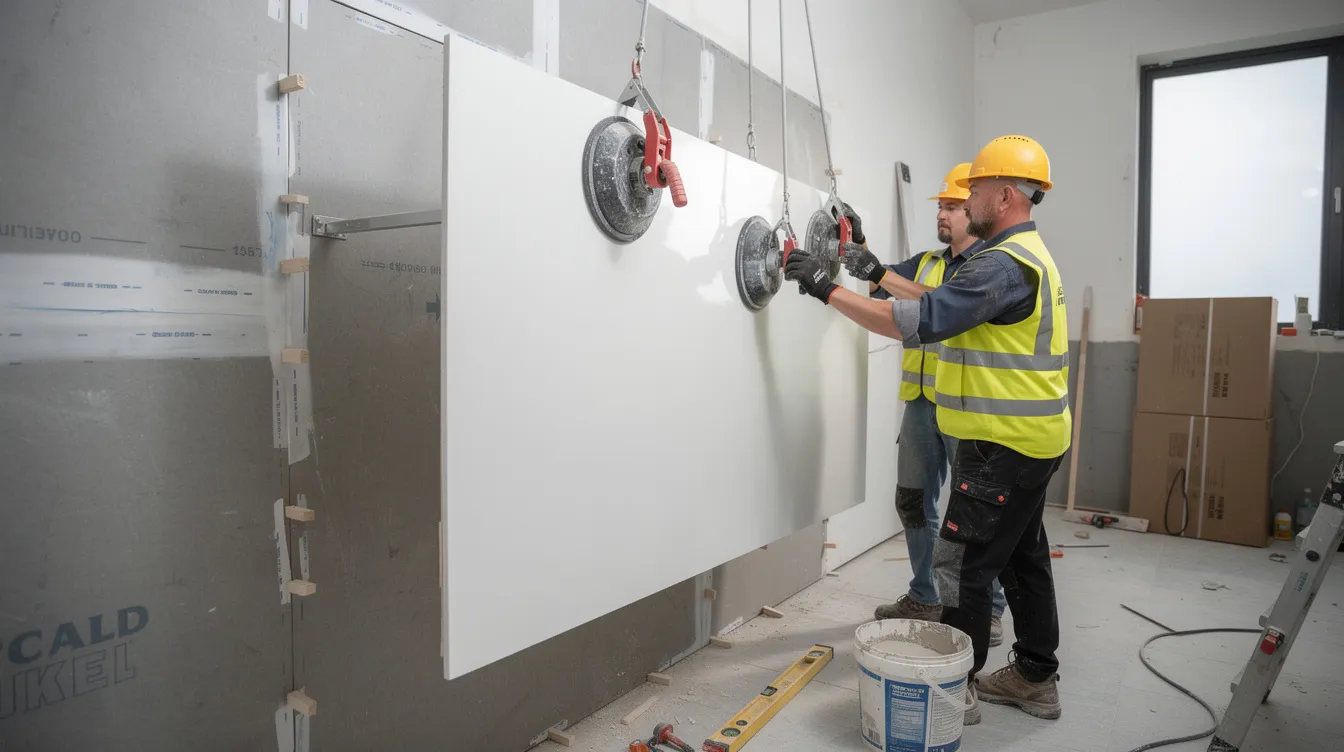
Complex handling: Large format porcelain slabs are fragile during transport and cutting. One wrong move on a job site and you’ve lost a $500+ panel. Installation of porcelain slabs can be complex and requires professionals.
-
Limited DIY feasibility: This is not a weekend project. Unlike traditional tiles, porcelain slabs demand specialized tools, handling rigs, and experience.
-
Tough repairs: Damaged porcelain slabs are difficult to repair invisibly. Because the pattern is surface-printed, a deep chip exposes the body color beneath-no matching that without replacing the panel.
-
Slip consideration: Porcelain slabs can be slippery when wet, depending on the finish. While shower walls are vertical, polished porcelain finishes reflect water and light in ways that feel visually “slick.” Always pair them with a textured shower floor.
-
Installer skill gap: Not every tile contractor has hands-on experience with installing porcelain slabs. In the Pensacola Bay area, verify your experienced installer has a portfolio of slab installs specifically-not just standard porcelain tiles.
What Do Porcelain Slab Shower Walls Cost in 2024–2025?
Let me give you real numbers. Porcelain slabs can start around $20 per square foot for basic options-solid colors, domestic brands, simpler textures. Bookmatched marble-look large format porcelain slabs and imported brands push to $50–$70 or more per square foot for material alone. Higher-quality porcelain slabs can exceed $120 per square foot at the top end.
Porcelain slabs cost between $50 to $120 per square foot when you factor in fabrication and installation labor together. Installation costs for porcelain slabs range from $1,000 to $3,000 per slab depending on cutouts and complexity.
For a typical 3-wall, 60″ × 36″ walk-in shower in the Pensacola area with walls about 8 feet high (roughly 100–110 square feet of wall area), expect a realistic total of $4,500 to $9,000 installed using mid-grade porcelain shower slabs. Add a bench, shower niche, and frameless glass door, and you’re looking at $9,000 to $12,000 or more.
That total includes slab material, layout planning, fabrication for plumbing cutouts, wall prep, waterproofing, and setting. Academy Construction provides written, line-item quotes so you see exactly how porcelain slab costs compare to tile showers or grout-free shower systems.
-
Material only: ~$20–$70+ per square foot
-
Installed all-in: ~$45–$110 per square foot
-
Typical 3-wall walk-in shower: $4,500–$9,000 installed
-
Extras (bench, glass, niche) add $2,000–$4,000+
Key Factors That Drive Price Up or Down
Several things move the final number:
-
Shower size and ceiling height: A standard 8-foot ceiling costs less than a 9-foot ceiling with extra slab height. More square foot coverage means more material and labor.
-
Number of panels and layout complexity: Benches, returns, niches, and windows all require custom cuts. Each cutout adds time and risk.
-
Material tier: A marble-look premium material costs significantly more than a simpler concrete-look or solid-color slab. Choosing the right porcelain slabs for shower walls means balancing visual impact with budget.
-
Site conditions: In older Florida homes, uneven studs, moisture damage, or the need for updated waterproof backer boards will add labor cost. But these fixes are critical-skip them and you’ll pay more later.
-
Job access: Moving large slabs up tight condo stairwells on Pensacola Beach takes more crew time than carrying them into a ground-floor Gulf Breeze home.
-
Installer tooling: Installing porcelain slabs properly requires specialized tools like diamond-blade wet saws and suction-cup handling rigs. Paying for a professional installer who owns this equipment is part of the investment.
Installation: Why You Need a Professional (and What to Expect)
Complex installation of porcelain slabs requires specialized labor-this is closer to stone fabrication than basic tile work. I strongly discourage DIY for full-height porcelain shower walls. Professional installation is crucial to prevent cracking.
Here’s what the process looks like:
-
In-home measurement and layout: Your installer plans veining alignment and seam placement to create a seamless style across the entire shower wall.
-
Demolition: Removal of existing tile or fiberglass surrounds.
-
Wall prep and waterproofing: Substrate must be structurally sound for porcelain slabs to adhere properly. Porcelain slabs require precise substrate preparation to prevent cracking. Waterproofing is essential when installing porcelain slab shower walls-membrane systems go down before any slab touches the wall.
-
Priming: A priming slurry is necessary for proper adhesion between the substrate and slab.
-
Dry-fitting: Panels are test-fit before final setting with large-format mortar at full coverage behind each slab.
-
Setting and sealing joints: Final placement, alignment around valves and niches, and silicone at seams.
Installation typically takes a few days for a standard shower. Academy Construction handles the full process in the Gulf Breeze, Navarre, and Pensacola corridor, coordinating everything from demo to final punch-list.
Maintenance & Cleaning: Keeping Slab Shower Walls Looking New
A new porcelain shower with slab walls is genuinely low maintenance compared with heavily grouted tile or natural stone that needs periodic sealing. Seamless surfaces created by porcelain slabs reduce maintenance issues dramatically. Here’s a simple routine:
-
After each shower: Wipe down walls after each shower with a squeegee to prevent water spots on the polished surface.
-
Weekly: Clean porcelain slabs weekly with a ph neutral cleaner and a soft microfiber cloth. Use a soft cloth to clean porcelain surfaces to avoid scratches.
-
Stain response: Address stains promptly with a baking soda and water paste-especially hair dye or self-tanner. Rinse quickly and the slab stays clean.
-
Seam check: Periodically inspect silicone at corners and panel seams.
What to avoid:
-
Harsh chemicals, abrasive powders, or steel wool
-
Oil-based soaps that leave films
-
Straight vinegar or strong acids
Porcelain slabs do not require sealing, unlike grout lines in tiled showers. Any minimal grout at seams should be epoxy or high-performance grout that holds up without frequent maintenance. With basic care, a porcelain slab shower can look close to new after 10–20 years in Florida’s humid climate. Since porcelain slabs can last over 30 years with proper installation, you’re investing in decades of easy upkeep.
Porcelain Slab Shower Walls vs. Other Materials
Here’s how porcelain stacks up against other common shower wall materials:
|
Material |
Cost (installed/sq ft) |
Maintenance |
Durability |
Visual Impact |
|---|---|---|---|---|
|
Porcelain slab |
$45–$110 |
Very low |
30+ years |
High-mimics stone |
|
Standard porcelain tile |
$15–$50 |
Moderate (grout) |
20+ years |
Good, many seams |
|
Fiberglass/acrylic |
$10–$30 |
Low |
10–15 years |
Basic |
|
$20–$45 |
Low–moderate |
15–20 years |
Moderate |
|
|
Natural stone slabs |
$60–$150+ |
High (sealing) |
20+ years |
Very high |
Traditional tiles can have hundreds of grout lines that require maintenance. Unlike natural stone, porcelain doesn’t need sealing, doesn’t etch from acidic products, and won’t stain from soap residue. Systems marketed as “mold free showers” (including brands like Sentrel and similar panel products) compete in the same grout-free space, but porcelain offers a harder, more scratch-resistant surface and a more authentic feel than acrylic or composite alternatives.
Quartz excels on kitchen countertops but is less ideal for constantly wet porcelain shower walls due to resin content and UV sensitivity.
Best candidates for porcelain slab: homeowners wanting high bathroom design impact, low maintenance, and strong resale appeal. If budget is tight and aesthetics are secondary, basic tile or fiberglass keeps upfront cost low.
Common Porcelain Slab Myths (and the Real Story)
Let me clear up a few porcelain slab myths I hear during consultations:
-
“They’re too heavy for framed walls.” At around 6 mm thick, wall-grade gauged porcelain panels weigh far less per square foot than thick stone. Properly backed framing handles them without issue. The substrate just needs to be perfectly flat and rigid.
-
“They crack easily.” Once installed correctly on a sound substrate, porcelain slabs are incredibly durable. Breakage risk is during transport and handling-not after installation. Porcelain slabs are an excellent choice for modern bathroom renovations precisely because of their toughness.
-
“You have to seal them like marble.” Porcelain slabs do not require sealing, reducing maintenance needs. The non porous surface handles moisture on its own.
-
“They look fake.” Modern digital printing and texturing produce highly realistic stone, concrete, and wood visuals. Most guests assume they’re looking at real natural marble. The aesthetic appeal of today’s large format slabs is far beyond what was available even five years ago.
Impact on Resale Value in the Pensacola Bay Area
Updated bathrooms consistently rank among the top resale drivers in Florida. In the Pensacola Bay area, buyers expect walk-in showers, clean lines, and minimal grout in mid-to-upper range homes. A porcelain slab shower delivers on all three.
Mid-range bathroom remodels in Florida typically recoup 62–70% of cost at resale. Upscale remodels recoup less-often 45–60%-because of diminishing returns on premium finishes. The sweet spot for porcelain slab shower walls is in that mid-to-upper range: enough visual impact to differentiate your listing without over-improving for the neighborhood.
A slab shower helps a 1990s Gulf Breeze or Navarre home compete with newer construction. Buyers see spa-like feel, “move-in ready” condition, and fewer perceived future repair tasks. Appraisers notice the difference between builder-grade fiberglass and slab shower walls, especially when you’ve updated the entire bathroom with a matching vanity, lighting, and fixtures.
No contractor can guarantee exact ROI. But porcelain slab showers support stronger listing photos, more showings, and better buyer confidence than dated or high-maintenance shower materials. If you’re considering a sale within 3–10 years, think of porcelain slabs as part of a targeted bathroom remodel strategy-not a random upgrade.
How to Choose Your Perfect Porcelain Slab Style
Finding the perfect porcelain slab style starts with your specific bathroom: its size, natural light, existing flooring, and cabinet colors.
-
Small hall bath: Light marble-look slabs open up the space visually.
-
Modern home: Soft greige or concrete-look porcelain delivers a clean, modern aesthetic.
-
Primary suite: Bolder veining or bookmatched panels create a dramatic focal point.
Finish matters. A matte or honed finish hides water spots better and reduces glare. Polished porcelain shows reflections and needs more frequent wiping. Lightly textured finishes split the difference.
Coordinate with your bathroom floor tile, vanity top, and other surfaces so the room feels intentional. If you’re doing a whole-home refresh, matching porcelain across your entire bathroom and adjacent spaces creates a cohesive look.
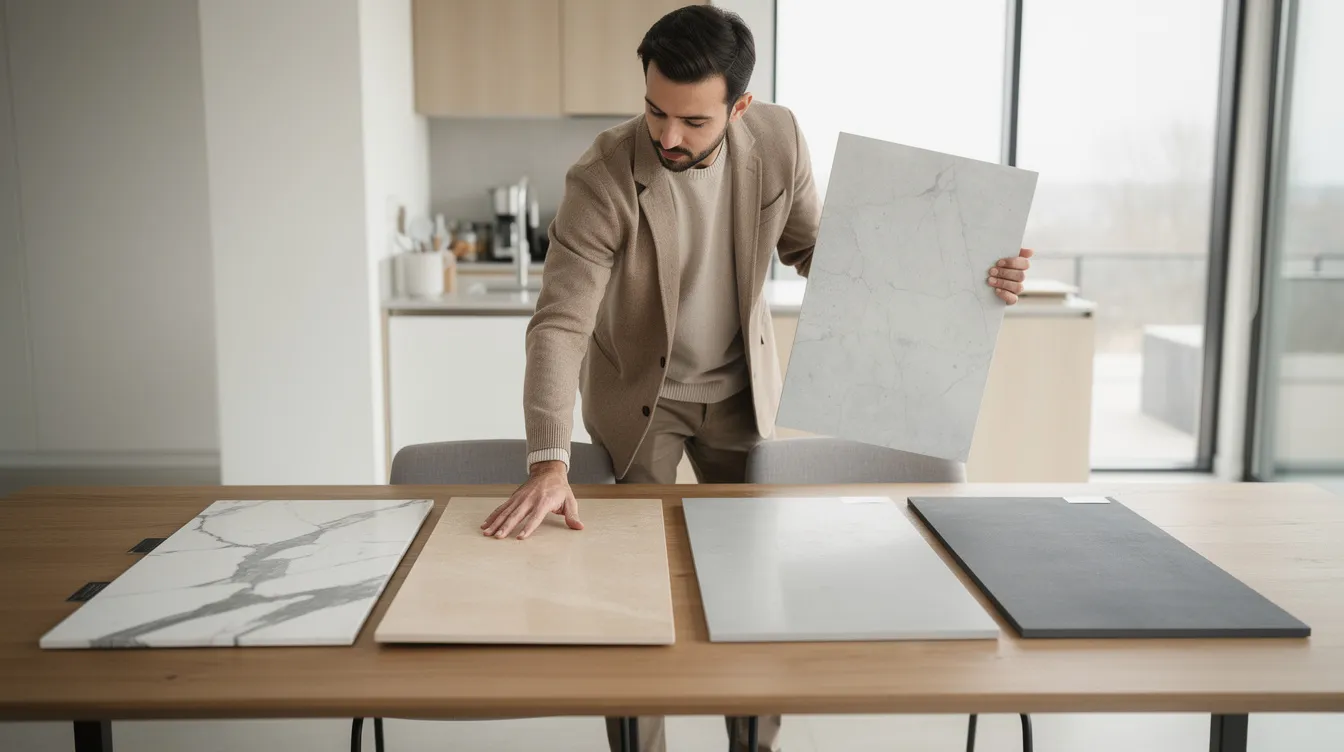
I always recommend homeowners in the Pensacola Bay area request full-size samples or visit a local showroom with their contractor. A 4-inch chip on your phone screen doesn’t show you how a slab reads at full scale on a wall.
Is a Porcelain Slab Shower Right for Your Home? (Next Steps)
Porcelain slab showers make the most sense if you:
-
Plan to stay at least several years and want to enjoy the upgrade daily
-
Dislike grout scrubbing and want a genuinely low maintenance shower
-
Value a higher-end look without the ongoing upkeep of natural materials
-
Want a premium material that supports resale when the time comes
Still on the fence? Consider these options:
-
Hybrid design: Use slab on the main walls and coordinating porcelain tiles on secondary surfaces to manage cost
-
Get multiple quotes: Compare pricing for tile vs. slab vs. other materials so you see real numbers, not guesses
-
Think long-term: If walk-in shower access, grab bars, or a bench matter now or later, plan for them from the start
Homeowners in Gulf Breeze, Navarre, Pensacola, Milton, Mary Esther, and Fort Walton can contact Academy Construction at 850-260-3360 or [email protected] for a free in-home consultation and transparent pricing on porcelain slab and other low-maintenance shower options.
-
Choosing the right material now gives you a beautiful, low maintenance shower you enjoy every day-and a bathroom that shows well when it’s time to sell.


