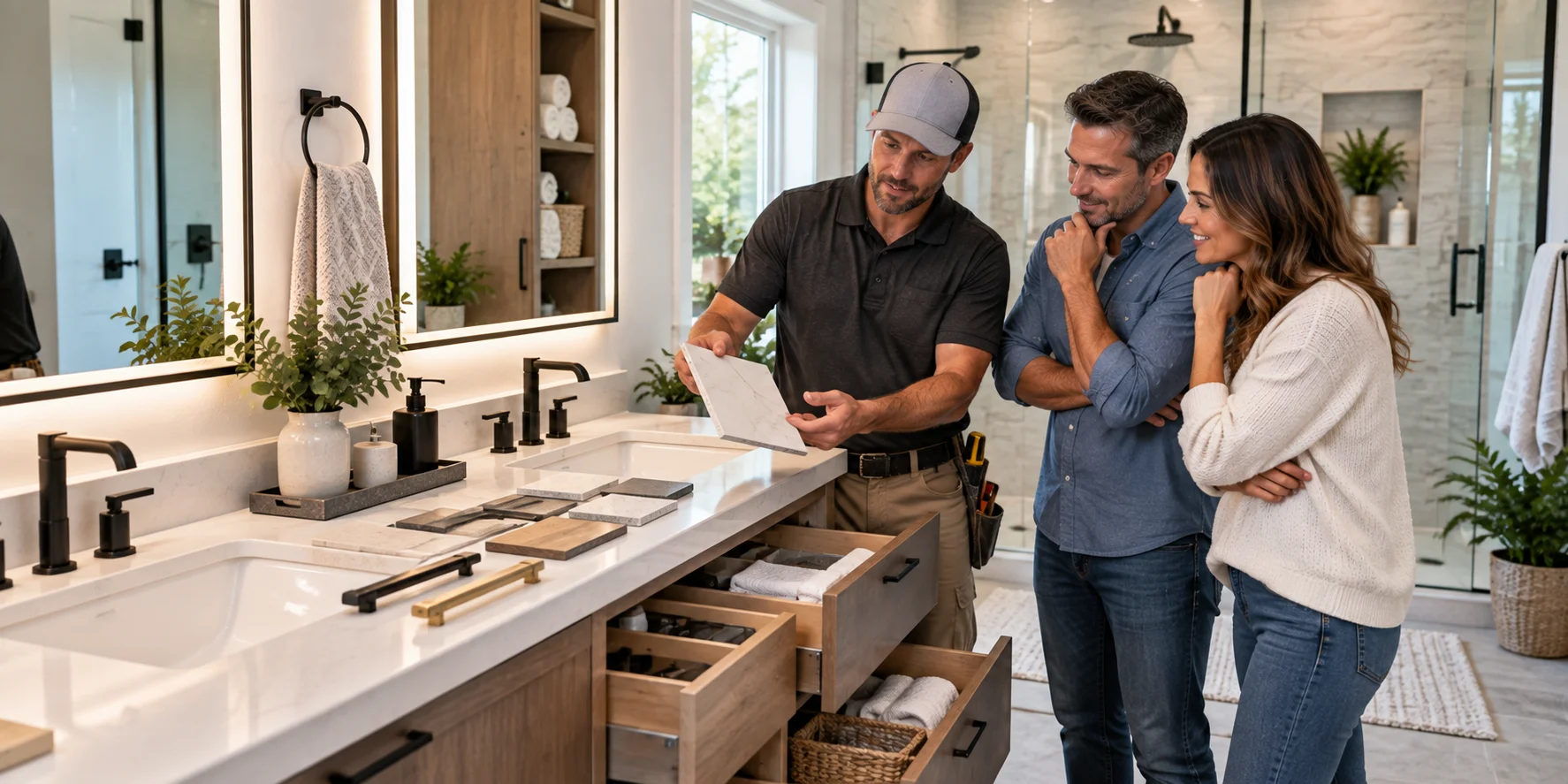
Kit or custom shower: the short answer
If the stud-to-stud opening, drain location, wall condition and access route match a standard tub-replacement kit, a prefabricated conversion kit is usually the simpler choice. Its pan is typically a single molded piece. Swanstone’s, for example, is one compression-molded pan with a molded-in drain. The material varies by manufacturer; Sterling’s Ensemble, for example, is a one-piece receptor compression-molded from Vikrell material. A custom-built shower is the better fit if you want a different size, a reconfigured layout, a true curbless entry that may require recessing the floor, a built-in bench, or a layout planned for aging in place, but only if the waterproofing under it is done correctly. Either way, swapping a tub for a shower changes the plumbing. The City of Pensacola’s adopted building code requires a permit to alter, replace or convert a plumbing system, so check the permit rules below whichever option you choose.
What a conversion kit actually is
A tub-to-shower conversion kit generally removes the tub entirely and replaces it with a new shower pan, also called a receptor, often paired with matching or separate wall panels. If someone quotes you a “conversion,” ask whether the tub itself is coming out.
Kit pans come in more than one material. Sterling’s Ensemble is molded from Vikrell, while Swanstone makes a 30 x 60 solid-surface alcove pan designed for tub replacement. For the walls, Swanstone says its solid-surface panels glue up over an existing surface. Ask your installer whether your existing walls are in good enough shape for that. You can also combine approaches, for example a prefab pan with tile walls or grout-free panels.
Some one-piece units are hard to maneuver through hallways and bathroom doors. Before ordering, compare the manufacturer’s dimensions with every doorway, turn and stair landing between your front door and the bathroom. If access is tight, ask your installer about a multi-piece wall system or a separate pan.
This comparison breaks down the real trade-offs so you can make a smart call for your bathroom, your budget, and your family.
Will a kit fit your alcove and your plumbing?
Kits come in fixed sizes, so the alcove has to match. Sterling’s Ensemble needs a rough-in of 60-1/4 x 30 x 5 inches, including the nailing flange. That is a fit dimension. Usable space is a separate number: Swanstone lists an interior width of 28 3/4 inches and an interior length of 57 1/2 inches for its pan, which is the space you actually stand in. It doesn’t tell you whether the pan fits your framing, so check the rough-in sheet for the exact model. Sterling makes its receptor in left- or right-drain versions, so you can choose the drain side that suits your plumbing. Once the tub is out, measure the alcove stud to stud, allow for the thickness of the finished walls, and note the drain’s distance from the back and side walls before you order.
The hole in the pan is not the same thing as the plumbing under the floor. Sterling’s spec sheet lists a 3-5/16-inch drain hole in the base, with the cutout sized to fit the drain assembly being used. It doesn’t state the drain pipe or trap size. That means the pan’s outlet tells you nothing about whether the trap and drain line meet code for a shower.
The Florida Building Commission’s summary of the 2023 plumbing code changes also notes a new requirement that waste fittings for shower waste outlets conform to ASME A112.18.2/CSA B125.2. Before the job is priced, have a licensed plumber identify the existing trap and drain diameter, venting and route, then confirm with the local building department what the inspector will require. If the tub drain can’t be reused, that changes both cost and schedule.
What Is a Tub to Shower Conversion Kit?

How a custom shower is waterproofed
In a custom tile shower, the tile and grout are the finish, and a membrane or liner underneath does the waterproofing. Traditional liners and bonded membranes are two common approaches, and several manufacturers make their own systems. Whichever is used, the slope, drain connection, corners, seams and pipe penetrations have to be handled as one complete system following its maker’s instructions. With a bonded membrane such as KERDI, the membrane bonds to the mortar bed or tray, and tile is set directly on it with thin-set.
Schluter says to wait at least 24 hours after the membrane is installed before the recommended water test, notes that curbless showers need a temporary dam at the threshold for that test, and adds that local plumbing codes may add requirements. A kit works differently. Swan, for example, promises its shower floor will not leak if it is properly installed and maintained according to its instructions. So “custom” doesn’t automatically mean better. A tile shower is only as reliable as the membrane work under it.
Low-threshold, curbless and accessible showers
A true curbless shower is a bigger job. According to Schluter, curbless showers rely on the slope of the floor to contain water, need waterproofing in all areas exposed to water, and require that any recessed floor preserve structural integrity, which may call for an architect or engineer. Before pricing, check the floor structure, the room available for slope, the drain’s location and height, how far waterproofing must extend, and how the glass or entry will be laid out.
The ADA does not apply to private single-family homes that aren’t used as public accommodations, so its shower rules are optional in your house. They’re still useful targets. The 2010 ADA Standards limit roll-in shower thresholds to ½ inch high maximum and call for a shower spray unit with a hose at least 59 inches long that works as both a fixed and a hand-held shower. For aging in place, AARP recommends a walk-in shower, a shower chair or bench, a handheld showerhead, and grab bars on the shower wall.
What Is a Solid Surface Shower?
A custom built shower is constructed on-site from scratch. It migh have solid surface walls (waterproof and grout free) or tile. Custom-built showers provide extensive design flexibility – you choose the layout, materials, and every feature.
Cost and Budget Impact
Valve and glass rules that apply either way
Whichever shower you choose, check the shower valve against the 2023 code changes. The Florida Building Commission’s summary of the 2023 plumbing code says shower control valves must be rated for the flow rate of the installed showerhead, and field adjustment of temperature-limiting devices must not exceed 120°F. The residential code’s shower valve section was also revised to require field adjustment of temperature-limiting devices and to correlate with similar plumbing code requirements. Before you pick fixtures, have your plumber check the existing valve’s type, condition, temperature-limit setting and access, and confirm with the building department whether the inspector will require a new valve when the fixture is altered.
Glass needs the same attention. Florida’s 2023 residential code treats walls next to bathtubs and showers as hazardous locations for glazing, which means safety glazing is required. The code text, as reproduced by the Florida Home Builders Association, applies this rule where the bottom exposed edge of the glass is less than 60 inches above a standing or walking surface. Shower doors and enclosures also fall under the federal safety standard 16 CFR Part 1201 as Category II products. If you choose a glass door or panel, confirm the glass is rated for that location.
Custom Build Pricing
Permits and inspections in Escambia and Santa Rosa counties
In unincorporated Escambia County, anyone who wants to alter, repair, convert or replace a plumbing system must first obtain a permit. The county lists a Plumbing Fixture Permit for replacing a bathtub with a shower or shower pan. The City of Pensacola requires alteration permits for bathroom remodels where all cabinets and plumbing, gas or electrical fixtures are removed, where sheetrock is removed to rough in subtrades, or where walls are added or removed.
Santa Rosa County lists plumbing among its permit types but that page gives no specific rule for tub-to-shower work. If you live in an unincorporated area of Santa Rosa County, call Santa Rosa County Development Services. Inside Milton or Gulf Breeze city limits, you need city approval before the county issues the building permit, and the City of Gulf Breeze confirms that you also need a Santa Rosa County building permit. On every Academy Construction project, the plumbing permit is pulled through the proper local office and the required inspection is done.
Hidden Costs to Watch
Durability, warranties and upkeep in a humid climate
Warranty fine print shows how much depends on the installation. Sterling warrants its Vikrell receptors for 10 years in owner-occupied homes and 3 years in rental property. That warranty excludes damage from improper installation, doesn’t cover removal or installation costs, and applies only to the original purchaser. Swanstone lists a Limited Lifetime Residential Warranty for its tub-replacement pan. The trade-off is where the risk sits: a molded pan leans on correct installation, and Swan, for example, requires a level subfloor and says improper installation will void the warranty, while tile depends on the membrane underneath.
Grout-free walls cut down on cleaning, but they aren’t maintenance-free. Swanstone says its solid-surface panels will not mold or mildew and have no grout to clean, but that is the manufacturer’s own claim, and seams, caulk joints and glass still need regular care. The EPA notes that places that are often damp can be hard to keep completely free of mold, and that running a fan or opening a window and cleaning more often will usually keep it to a minimum. The EPA also advises keeping indoor humidity below 60 percent, ideally between 30 and 50 percent.
Winner: Conversion kits – clearly more affordable. But the price gap narrows when you factor in longevity. Spending $2,000–$3,000 more for custom tile often pays off in both satisfaction and resale value within 5–10 years.
Solid Srfaces and Tile
What each option costs and how long it takes
A kit’s shelf price is not what the project costs. Installed cost varies from house to house. Your total will depend on demolition and disposal, any drain or valve changes, repairs needed once the tub is out, wall prep, the permit, glass, and the wall material you choose. A custom tile or curbless build adds membrane work and tile labor on top of that, and a curbless build may need the floor recessed, with the structural checks described above.
With a membrane system such as Schluter’s KERDI, waterproofing and testing can add calendar time. Schluter says the water test is done before setting tile and recommends waiting at least 24 hours after setting KERDI to begin it. Academy Construction gives you a written scope with itemized pricing and a realistic schedule before demo day. For a standard conversion with grout-free materials, we typically sequence the work across 3–5 working days.
Design Flexibility and Customization
This is where kits and custom builds aren’t even in the same category.
What Kits Can (and Can't) Do
Which option fits your bathroom
A kit, or a kit pan with tile or grout-free panel walls, fits best when the shower will stay in the existing alcove, a plumber confirms the drain and valve can be adapted, and you want a molded pan instead of a site-built floor. A custom shower fits best when you want a bigger or reconfigured footprint, a curbless entry and you’re prepared for floor modification, which may include recessing the floor, drain changes and added waterproofing, a built-in bench or niches, or a bathroom laid out for aging in place. If this is your home’s only tub, think about who might live there later, and ask a local real estate agent how removing it could affect resale.
If you’re weighing a kit against a custom shower, Academy Construction offers a free in-home bathroom remodeling consultation and specializes in tub-to-shower conversions, walk-in shower systems, tile showers and grout-free options. Bring your doorway measurements and your list of must-have features.
What Custom Builds Offer
Winner: Custom built showers – and it’s not close. Kits work fine if you’re happy with standard options, but if you want your new shower to actually match your vision, custom is the only real path.
Durability and Long-Term Performance

In Florida’s humidity, salt air, and frequent rain, how your shower holds up over 10–20 years matters as much as how it looks on day one.
How Kits Hold Up
How Custom Tile Performs
Winner: Custom built showers – but only when installed correctly. A poorly installed tile shower performs worse than a decent kit. Quality of installation matters more than quality of materials.