

Walk-In Shower Drain Options: Center, Linear & Offset Drains Compared
A comparison of linear, center, and offset drains and their use in walk-in shower remodels. The appeal of linear drains, and the large format tile often paired with them, comes not so much from their everyday beauty as how they catch the eye in listing photos and attract buyers who are comparing homes to newer construction. You can spend less by keeping a center drain and smaller tile, but the impact in photos will be very different.
If you’re remodeling your bathroom in Gulf Breeze, Navarre, Pensacola or anywhere along the Coast, the type drain you choose affects the tile you select, the slope of your shower floor and what your home will show for on Zillow. Walk in showers are standard now in most mid to upper range homes and buyers definitely pay attention to details.
Quick Answer: Which Walk-In Shower Drain Is Best & How It Affects Resale Value
There’s no single “best” drain. The right one for your floor depends on your budget, existing plumbing and whether you plan to sell within the next few years.
Here’s the quick breakdown:
-
A center drain is the most budget-friendly option and works in every shower configuration. It keeps costs low but limits you to smaller tile on the shower floor.
-
A linear drain costs more but delivers a modern, spa-like look that buyers associate with new construction. It supports curbless shower designs and large format tile with clean grout lines.
-
An offset drain splits the difference-it shifts the drain position to avoid slab cutting while keeping material costs closer to a center drain.
Since about 2020, Gulf Coast resale comps show that updated walk-in showers with linear drains and large-format tile photograph well and help listings compete against newer construction. In Florida, mid-range bathroom remodels recoup 74–80% of their cost at resale, and showers and surrounding features help push that number higher.
Choose wisely. A good drain looks ahead at your future needs, as well as plumbing, maintenance, and budget trade-offs. Here’s a walk-through to help you find the best drain for you.
How Center, Linear & Offset Shower Drains Work (Plain-English Overview)
Every walk-in shower requires a way to move water into the waste line. And that choice of drain type will determine how to slope the shower floor, which tile will work on that floor, and how accessible the shower’s entry can be. All three styles connect into the same plumbing system downstream, and the difference is all what’s on the surface.
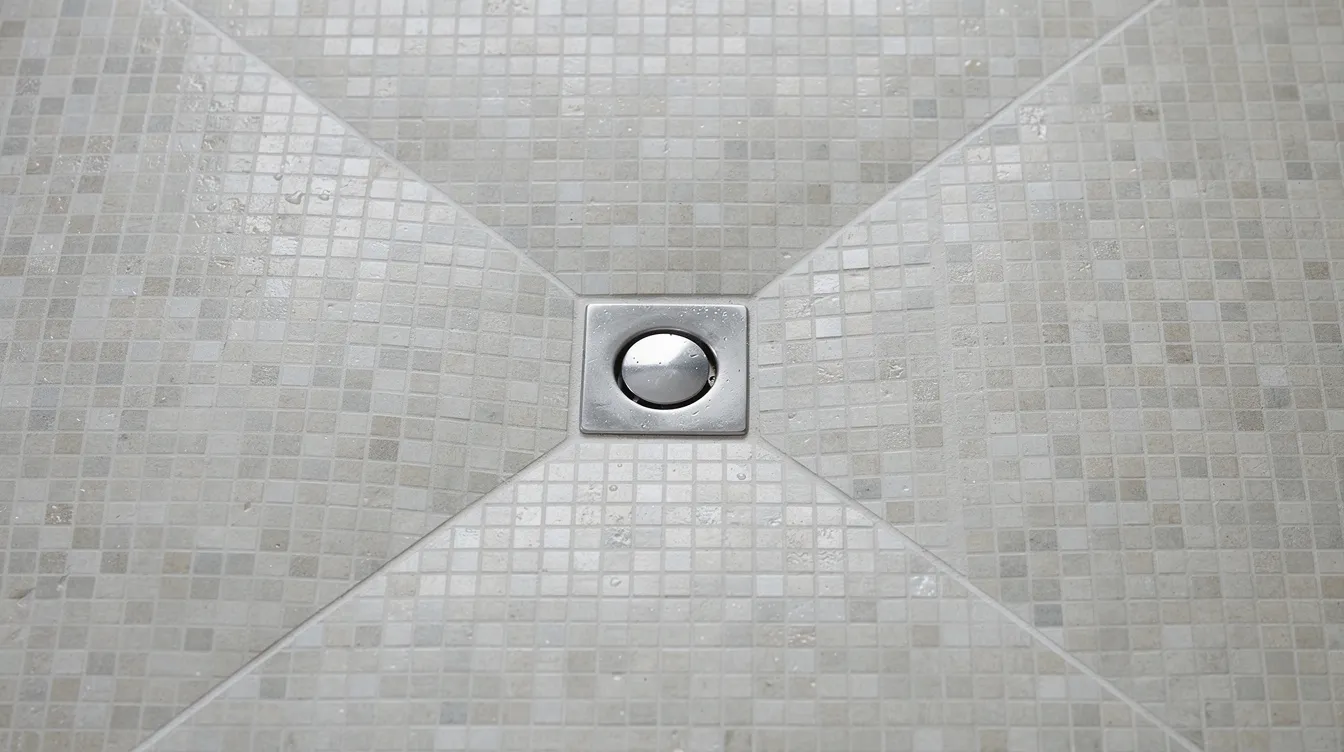
A center drain is a round or square drain sitting roughly in the middle of the shower floor. The floor slopes toward it from all four sides in a compound slope. Center drains are compatible with all shower configurations, and they are the most versatile of all drain types. They require the floor to slope uniformly downward from all sides.
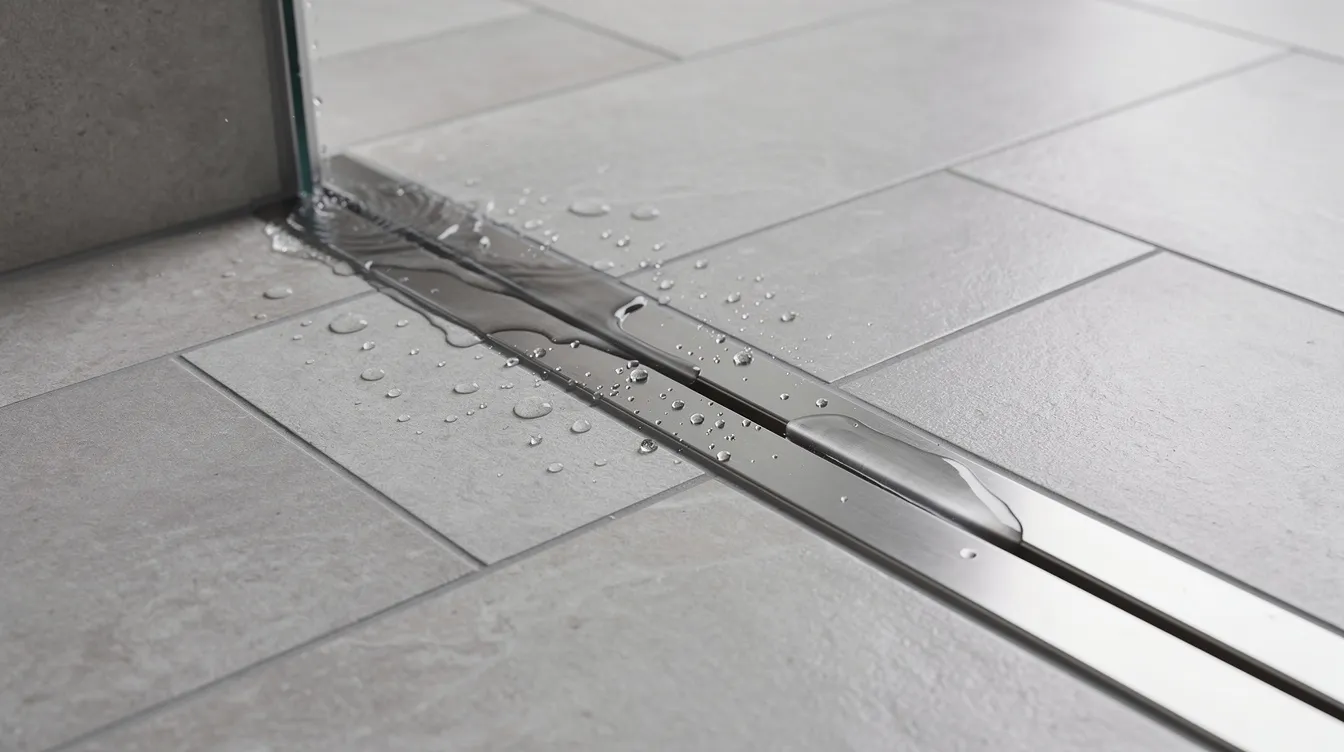
A linear drain is a long channel-typically 24 to 72 inches-installed along one edge of the shower, often tight to a back wall or at the threshold. The floor pitches in just one direction toward that channel. Linear drains improve water flow efficiency and can be installed in various locations within the shower layout.
An offset drain is a standard point drain positioned off-center within the shower stall. You shift it toward a back wall or align it with existing plumbing to avoid major slab work. It still needs a four-way slope, just aimed at a different spot.
For any existing shower remodel, the current rough-in location under the slab or subfloor usually steers your most practical drain options.
Design & Aesthetics: How Each Drain Type Looks in a Modern Walk-In Shower
When a homeowner and I meet for a consultation, I am often greeted with a look of amazement when I pull out an example of a linear shower drain. This reveal often sparks a little math moment: Both linear drains and traditional center drains are functional options for showers, but they can change the way a bathroom looks dramatically.
Center Drain: The Familiar Look
The center drain is what most people picture when they think of a shower drain. This type of drain typically comes in every standard tile shower built from the 1990s through the 2010s. A cover, either round or square, sits in the middle of the shower, and it often comes in brushed nickel, oil-rubbed bronze, or matte black to match other fixtures in the room. Center drains work best with smaller tile on the floor, leading to more grout lines that read as “standard” in listing photos.
Linear Drain: The Spa-Style Statement
Linear drains have a sleek, modern design. Even when a wall-to-wall linear drain channel is used, you can hide it with a tileable grate. This makes the drain look like it seamlessly disappears into the surrounding floor tile. This can make curbless shower designs aesthetically pleasing, and fewer grout joints means straight lines of tile.
Those straight, unbroken lines make your online listing photos irresistible.
Offset Drain: The Practical Compromise
An offset drain looks like a center drain, but shifted. Closely positioned, they don’t draw attention, as a center drain at a random or awkward location might. An offset drain can easily line up with a bench or niche to create cleaner symmetry through the tile layout, without the cost of going linear.
While traditional center drains are still most popular for budget-focused projects and secondary baths, our Pensacola Bay-area remodel clients most often choose linear shower drains for their full bathroom remodels and master suites.
Tile Layout, Slope Geometry & Large Format Tile Compatibility
Your shower’s drain position affects the slope geometry you can use, which affects the tile sizes that can be used on the floor. Get any of this wrong, and you might get lippage, cracked tile, and water pooling in the corners.
Center Drain and the Four-Way Slope
A center drain requires four-way slope, in which the floor is pitched in a shallow bowl — roughly 1/4 inch per foot from all four sides toward the middle of the shower. Small tiles, such as mosaic tile (1-by-1-inch or 2-by-2-inch squares), conform well to the complex slopes as they bend over the places where the slopes meet without lifting up at the edges. Large tiles, such as 12-by-24-inch or 24-by-24-inch, require cutting into smaller pieces at the drain, disrupting the pattern and resulting in more grout lines.
Linear Drain and the Single-Plane Slope
A linear drain allows for a single-direction slope, making it simpler to install large-format tiles without interruption and with minimal cuts. It also matches well with a shower design where the entire floor pitches in one direction, like a very shallow ramp. Paired together, these elements create a clean and modern look, especially when the linear drain is tight to the back wall or right at shower entry.
Offset Drain Tile Considerations
With offset drains there are still slopes converging to a point but mosaics are still the best chance at making things look good. Moving the drain slightly will allow the tile to fall exactly where it needs to to avoid cuts on benches, niches, and knee walls.
Waterproofing, Slab Conditions & Existing Plumbing Constraints
In Florida, waterproofing isn’t optional—it’s survival. With slab-on-grade foundations and high humidity and moisture from the coast, performance and protection of any drain you choose depend significantly on the quality of waterproofing done. A drain’s performance can only be as good as the waterproofing done at its connection.
How Drain Choice Affects Slab and Waterproofing Work
Your drain type determines how much of the slab gets cut, whether you can go curbless, and how the waterproofing membrane ties into the drain body.
Center drain: Often easiest when you can reuse the existing shower drain location. Minimal slab cutting if the rough-in sits in roughly the right spot. Works with most pre-sloped shower pan systems and foam trays. Moving a center drain may require cutting into a concrete slab, which adds cost and risk.
Linear drain: Frequently needs a recessed or lowered section of slab to maintain proper slope while keeping a low threshold. The waterproofing system connection is longer-the membrane must bond fully along the entire linear drain flange. Linear drains need precise installation to avoid drainage issues. Curbless linear shower designs require early planning during a full bathroom remodel, not as a quick swap.
Offset drain: Offset drains help in avoiding structural obstacles during remodeling. You can sometimes connect to existing plumbing with short offset fittings without cutting much slab. Still needs careful waterproofing at the new drain location and any patched slab areas.
Florida plumbing code is no joke. Neither are manufacturer instructions. Don’t get stuck with unsafe plumbing work! Contact Academy Construction for your free in-home consultation about plumbing in Florida.
Accessibility, Aging-in-Place & Daily Use Comfort
shower solutions The best drain adds accessibility Many homeowners in the Pensacola Bay area are now asking for showers they can safely use into their 70s and 80s-especially after a knee or hip replacement. The type of drain you pick can have…
Center drains: The four way slope means the bathroom floor inside the shower is never perfectly flat. That slight dishing in multiple directions can be less stable for walkers or shower chairs. Curbless entry is technically possible but more complex to detail.
Linear drains: Linear drains support curbless shower designs and work beautifully for barrier-free entries, especially when placed at the shower entry as a water line. The single direction slope works better with rolling shower chairs and mobility aids. The floor pitches one direction, which feels more predictable underfoot.
Offset drains: Function similar to center drains for slope and footing. The main benefit is plumbing convenience, not accessibility.
Retirees moving to coastal Florida to be near their family are among the buyers who would be attracted to step free walk in showers of all types including those with linear drains.
Cleaning, Long Hair, and Everyday Maintenance
I hear this at almost every consultation, as the drain choice directly impacts the frequency of hair clogs and soap residue buildup — particularly in homes with multiple people who have long hair!
Center Drain Cleaning
Center drains generally require less maintenance than linear drains, as their smaller surface area allows hair to collect in one easy-to-reach place. Though these potential clogs can build up quickly and localize around the drain, they are easy to remove thanks to a removable strainer or screw-in drain cover. In fact, this type of drain has less drain surface area and therefore collects debris and soap less effectively, requiring routine rinsing and deeper cleanings much less often.
Linear Drain and Long Hair
The longer opening of a linear drain allows long hair to be kept flatter along the drain channel instead of balling up immediately. If you choose a linear drain system, you’ll also have removable inserts, making it easy to pull the tray out and rinse the entire channel. Because water flows along the length of the channel instead of just down, drainage systems may need to be cleaned more often. In humid climates like Gulf Breeze and Navarre, failing to do so could allow mildew to take hold. Hair catcher inserts are available, but you’ll need to clean them, too.
Offset Drain Cleaning
Similar to a center drain in how it clogs and how you clean it. The shifted drain position doesn’t change maintenance needs.
Realistic cleaning intervals: Quick rinse and hair removal weekly in busy households. Deeper cleaning monthly, regardless of drain type. Make sure water flows freely after each clean-standing water means something’s blocked near the p trap.
Budget, Labor & When Each Drain Type Makes Financial Sense
The total cost comes from the drain body and grate ($125-$225), adjusting plumbing ($0-$250), creating the shower pan/slope ($250-$750), tile work labor ($500-$1,200), and waterproofing ($250-$700).
Center drains: Center drains typically have lower installation costs and are familiar to plumbers. Center drains are typically more affordable than linear drains-basic models can cost as little as $10, with most standard drains in the $20–$60 range. Designer grates push that higher. Installation of center drains is easier for DIY homeowners, and labor costs stay low when you reuse the existing shower drain rough-in. Your best bet for budget-friendly tub-to-shower conversions in guest baths or rental properties.
Linear drains: Channel bodies and decorative covers-especially in stainless steel or tile-in styles-often run several hundred dollars. Linear drains require more skilled installers than center drains. Labor costs are higher due to more precise leveling, slope work, and waterproofing connections. But a linear system can still be cost-effective in a full bathroom remodel where the floor is already open and the resale appeal justifies the upgrade. Linear systems typically add $500–$1,500 or more to the shower portion versus a center drain, depending on slab impact.
Offset drains: Material cost similar to center drains. Can save on labor compared with fully relocating plumbing or cutting long channels-a useful compromise in certain layouts.
You will see what the cost difference is between keeping your center drain and upgrading to a linear system. Every line, tile, waterproofing, slab, etc., is broken out for total transparency, so you know exactly what you are paying for.
Impact on Resale Value in the Pensacola Bay Area
More buyers in Gulf Breeze, Navarre and Pensacola are looking for homes with updated bathrooms and homes above a certain price point now seem to require walk-in showers. We’ve noticed this trend gaining traction since 2020 when new construction became more common.
Center drain impact: A new, well-tiled walk-in shower with a center drain still adds significant value over an old fiberglass tub/shower combo. Photos look clean and updated-just not necessarily “luxury.”
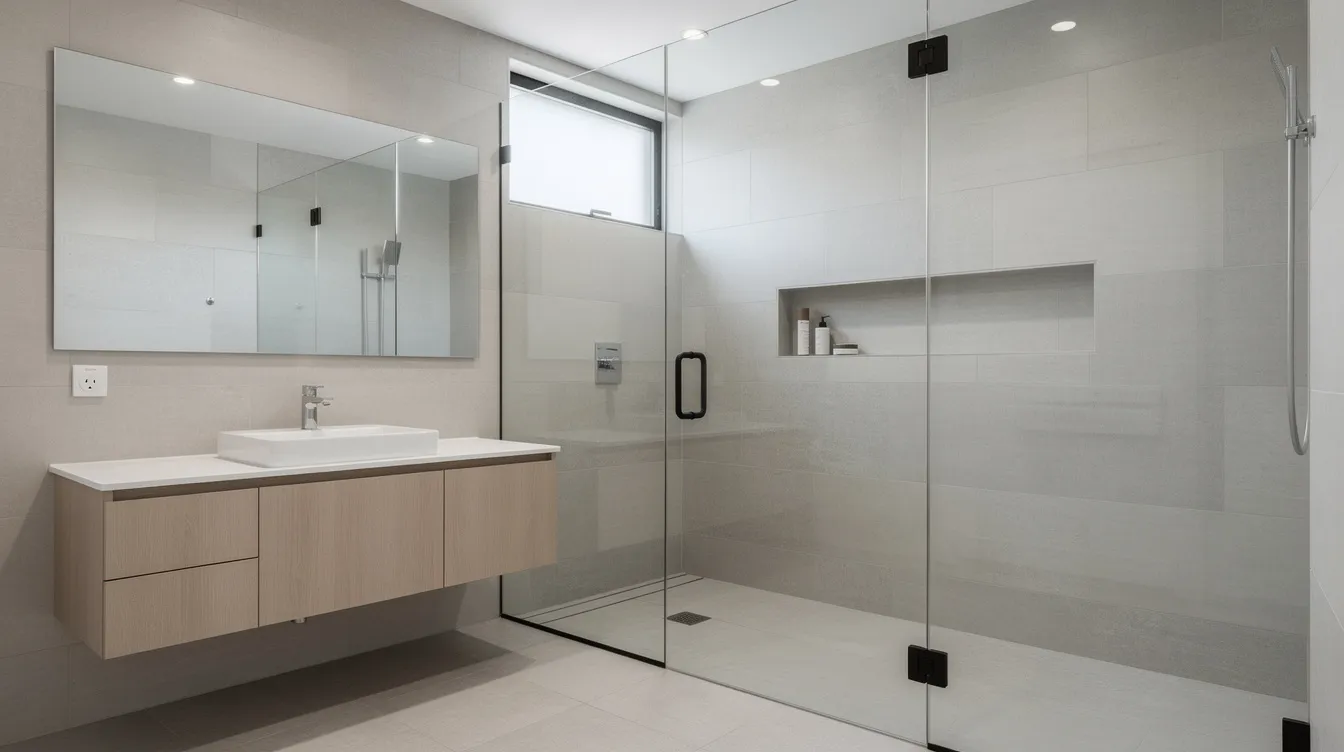
Linear drain impact: In MLS photos, a linear drain with large format tile and frameless glass reads as higher-end construction. It helps a remodeled 1990s or 2000s home compete visually with new-construction spec homes. No single feature guarantees a higher appraisal number, but the combined effect of a linear shower, curbless entry, and modern tile supports stronger offers.
Offset drain impact: Mostly neutral on its own. The value comes from overall tile and waterproofing quality, not the slight drain shift.
I’ll tell you what the difference a linear drain can make. I recently did a master bath remodel in Navarre area that featured a linear drain and full height glass panel, and 24×48 tile. That home had 3 offers in the first week, one over asking price! The secondary bath in the same house had a standard drain and standard tile. It certainly looked fine but did not get the same attention. The drain is not the only factor, but it’s part of the package!
Converting an Existing Shower or Tub: Practical Scenarios
Three projects I see over and over in our service area:
-
Replacing a fiberglass shower with a tiled walk-in shower.
-
Converting a standard tub to a walk-in shower.
-
Gutting and retiling an older, leaking shower.
Scenario 1-Keep existing center drain: Often chosen when budget is tight or the existing drain location already works with the new shower layout. Minimal slab cutting, faster turnaround, less dust and noise. Hot water gets flowing again sooner.
Scenario 2-Upgrade to a linear shower drain: Usually part of a full bathroom remodel where floors are already being retiled and the homeowner wants a curbless entry with large tiles. Requires planning around slab recessing and is best handled by an experienced local contractor-not a weekend project.
Scenario 3-Offset or slightly move the drain: The right call when the existing shower drain ends up under a future bench, centered on a grout line, or in an awkward spot for the new design. May involve limited slab cutting and new waterproofing, but not a full plumbing reconfiguration.
I strongly recommend you talk to a professional before making any assumptions. Switching from a center drain to a linear drain (cutting slab) may be required… for most homes on a slab in Florida.
How to Choose: Matching Drain Type to Your Home, Lifestyle & Budget
There’s no one-size-fits-all answer. Here’s a decision checklist I walk through with homeowners:
-
Budget range for the overall bathroom remodel
-
Resale timeline-selling within 3–7 years, or staying long-term?
-
Curbless or low curb-accessibility now or planning ahead?
-
Tile preference-large format tile on the floor, or comfortable with mosaics?
-
Household reality-people with long hair, kids, aging parents?
Center drains fit budget-conscious projects, small secondary baths, and quick tub-to-shower conversions where large floor tiles aren’t a priority. They handle higher drainage capacity relative to their size and every contractor knows how to install them.
Linear drains fit primary suites, design-forward remodels, aging-in-place plans, and homeowners who want their bathroom to match the new-construction homes selling nearby.
Offset drains fit situations where plumbing constraints or slab conditions make full relocation impractical, but the design benefits from a more intentional drain position.
A couple in Navarre choose a linear drain when they remodeled their full master bath in 1998, craving a curbless entry with 24×48 tile and frameless glass. Down the road in Milton, an owner of a rental property did the right thing by keeping the center drain in a cost-effective tub-to-shower conversion.
Work With a Local Bathroom Remodeler: Academy Construction
Are you looking to update your bathroom? Academy Construction has got you covered! Based in Gulf Breeze, we offer affordable prices and top-quality materials options. We serve customers across Navarre, Pensacola, Milton, Mary Esther and Fort Walton. Call us now.
Here’s how we work:
-
Free in-home consultation to inspect your existing shower, slab, and plumbing
-
Clear explanation of center, linear, and offset drain options with honest pros and cons for your specific house
-
Transparent written quote showing pricing differences between drain types and related work-tile, waterproofing, curbless prep-line by line
Our team can assist with tub to shower conversions or walk-in shower remodels. Whether you want a grout-free wall system, tile shower, or accessibility options, we can help!
Contact us:
-
Address: 506 Navarre St, Gulf Breeze, FL 32561
-
Phone: 850-260-3360
-
Email: [email protected]
Schedule a consultation today to review your existing shower and discuss the best drain type, whether a curbed or walk-in design is right for your home and future resale.


