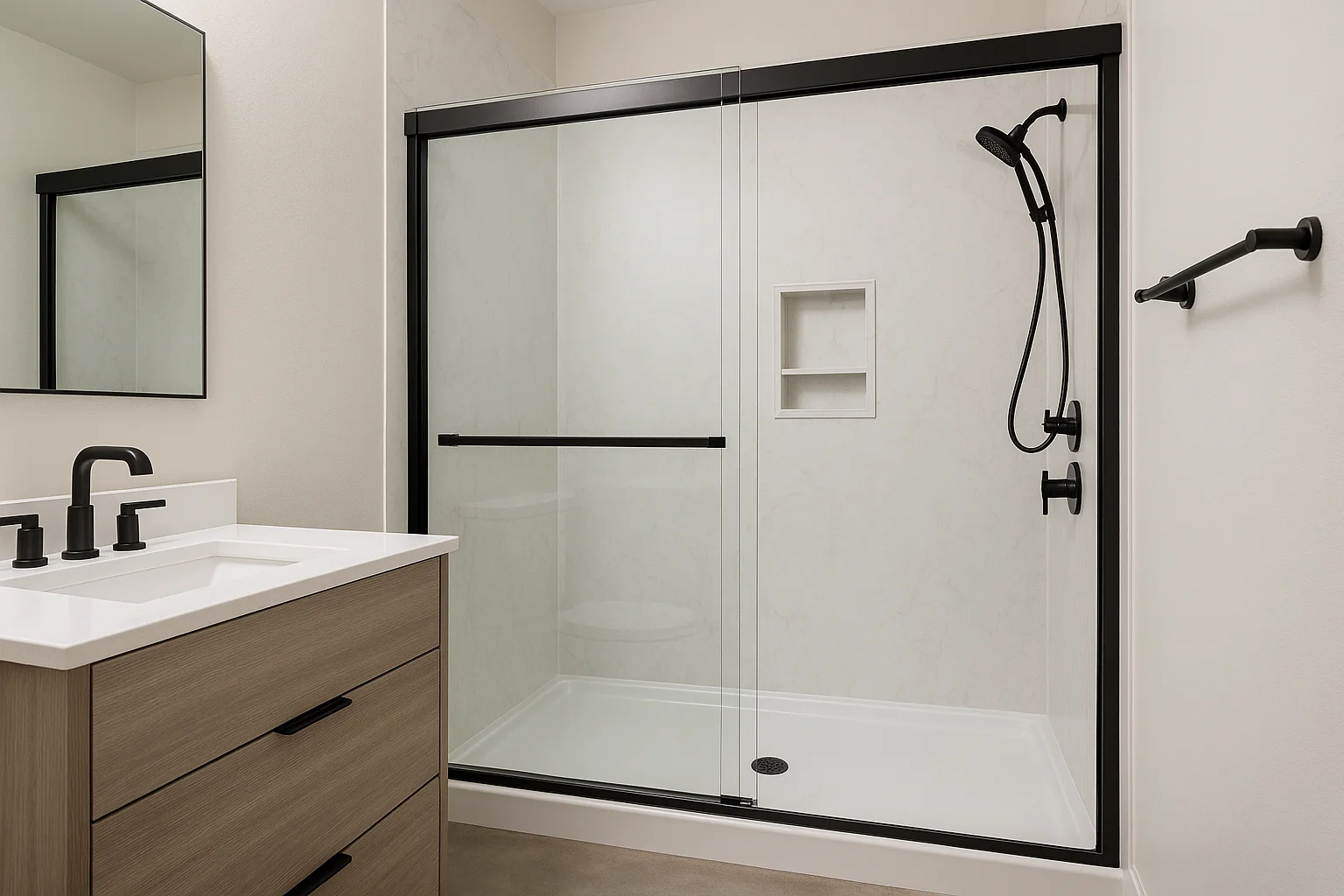
A tub to shower conversion involves real plumbing work, not just setting a pan where the tub used to be. A plumber checks on site whether the existing drain line can stay or needs to be resized or moved. The tub comes out, and the valve is set up for shower-only use. Moen, for example, offers a shower-trim-only model for the same valves as its tub/shower trim. The sections below explain each change, what can stay, and what a good quote should spell out if you live in Pensacola, Gulf Breeze, Navarre or Milton.
Quick Answer: The Core Plumbing Changes in a Tub-to-Shower Conversion
Plumbing isn’t a side detail in this kind of conversion. It’s the backbone. Here’s a quick rundown of the core changes involved:
Does the drain have to change?
The shower’s drain fitting has its own code requirement, even when the pipe stays where it is. The 2023 Florida Building Code, Plumbing (8th Edition) added Section 421.3.1, which requires shower waste outlet fittings to conform to ASME A112.18.2/CSA B125.2, according to the Florida Building Commission’s analysis of changes.
It helps to separate what you can see from what’s under the floor. The strainer in the shower base is a different part from the pipe and trap beneath it, so a strainer that looks the right size doesn’t tell you whether the pipe is. Because the right drain size and layout depend on the existing plumbing, a licensed plumber should verify them on site before the drain is sized or moved.
Moving the drain to the center of the floor or to a linear drain adds work. Have the plumber confirm on site whether the existing drain location works with the base or waterproofing system you choose.

Understanding the Difference: Tub Plumbing vs. Shower Plumbing
What happens to the valve and the tub spout?
The valve body sits inside the wall, and the trim is the handle and plate you see. Under Section 412.3 of the 8th Edition, the shower control valve must be rated for the flow rate of the installed showerhead. That means the valve and the showerhead should be chosen together.
A tub/shower valve typically feeds both a tub spout and a showerhead, and some manufacturers support a shower-only setup where the tub outlet goes unused. Manufacturer instructions may cover a shower-only setup. Moen’s tub/shower trim instructions skip the tub spout step for a shower-only installation, for example.
Ask your plumber and the valve manufacturer which valve suits your household and your existing supply lines, especially if you’re planning more than one outlet.
Can you add more showerheads or body sprays?
You can, but it’s worth having a licensed plumber check how each added outlet affects the valve and the drain. Federal efficiency standards limit showerheads made after January 1, 1994 to 2.5 gallons per minute (gpm) at 80 psi. Under the EPA’s WaterSense specification for showerheads, Version 1.1, labeled showerheads must be rated at 2.0 gpm or less, and the specification doesn’t cover body sprays.
As the valve section above explains, the showerhead you choose affects which valve you need. Adding a handheld, a second head or body sprays also adds to what the plumbing has to supply. More outlets also send more water to the drain at the same time. If outlets will run at the same time, have a licensed plumber check supply capacity, valve compatibility and drain capacity for the exact outlets you pick before you settle on the setup.
Choosing the shower base or pan
Common choices for the base include a prefabricated base, a site-built mortar bed with a liner, or a foam or sheet waterproofing system under tile. A grout-free wall system changes the wall surface, but the floor still needs a base that handles water.
Ask the office issuing your permit (Escambia County, Santa Rosa County or the City of Pensacola) how it inspects site-built shower pans. Pinellas County’s building department, for example, requires a water test filled to within 1 inch of threshold height, and a pressure test on the supply piping. That form is one county’s version.
Feature | Typical 60" Alcove Tub | Walk-In Shower (Current Code) |
|---|---|---|
Drain size | 1½ inch | 2 inch |
Drain location | End wall, off-center | Centered or at lowest floor point |
Valve height | 12–16 inches above floor | 42–48 inches above floor |
Continuous drainage | No (holds, then drains) | Yes (must drain during use) |
Drain Relocation: From Tub End to Shower Floor Center
“The drain has to move” is usually the single biggest plumbing change – and the one that drives the cost of the whole job more than anything else.
Planning a curbless or accessible shower
A curbless shower puts the finished shower floor flush with the bathroom floor. Have a contractor look at the floor before you commit to the design, because a low-threshold shower may give you most of the benefit with less work. If grab bars or a bench are in your plans, decide where they’ll go now so blocking can be installed before the walls are closed.
Should you replace old pipes while the walls are open?
Insurance requirements can affect this decision, especially in older homes. Citizens Property Insurance requires a four-point inspection for all property owner, dwelling and mobile home applications on properties more than 20 years old, and the Florida-licensed inspector must report the age, type and condition of the plumbing system. Polybutylene has been a particular issue. A Citizens bulletin from April 28, 2022 stated, for HO-3 and HO-8 policies, that “New-business risks that are over 20 years old with polybutylene piping are not insurable by Citizens.” That bulletin is historical and hasn’t been updated for later changes, so confirm the current rule with your insurance agent.
Galvanized supply lines and cast iron drains are also worth having a plumber assess. A conversion already opens the wall and part of the floor, which makes it a practical time to replace aging pipe instead of reopening the bathroom later.
Do you need a permit for a tub-to-shower conversion?
Expect one. In unincorporated Escambia County, check with Escambia County Building Services about which permit a conversion needs, even if the shower stays in the same spot. State law (s. 553.79(1)(a)) makes it unlawful to alter, modify or repair any building without first obtaining a permit from the enforcing agency, unless another law provides otherwise. The newer $7,500 exemption for single-family work doesn’t change that for this job, because the statute excludes any plumbing, electrical, structural, mechanical or gas work, and any property partly or entirely in a flood hazard area. The Florida Building Commission’s summary of HB 803 lists the bill’s effective date as July 1, 2026 and confirms that plumbing work is excluded.
Inside Pensacola city limits, plan on a permit for any conversion that touches the drain or the valve: the city’s adopted Florida Building Code Chapter 1 requires a permit to alter or replace a plumbing system, and its repair exemption doesn’t cover work that replaces or rearranges valves, pipes or fixtures. Starting July 1, 2026, the city exempts non-structural single-family work valued under $7,500, but you must apply for a Building Permit Exemption Application through MGOConnect. Larger remodels can also trigger the city’s alteration permits for bathroom remodels in which all cabinets and plumbing, gas or electrical fixtures are removed, and when sheetrock is removed to rough in subtrades. Confirm the permit type with the city before work starts.

Drain Size and Trap: Upgrading to a 2-Inch Shower Drain
Modern building codes typically require a 2-inch drain for standalone showers. That’s a step up from the 1½-inch pipe your bathtub used, and it matters more than you’d think.
Which office issues the permit in Gulf Breeze, Navarre and Milton?
Gulf Breeze’s FAQ says that building in the City of Gulf Breeze also requires a Santa Rosa County building permit. Santa Rosa County lists plumbing among its permit types. If you live in Navarre or Milton, or aren’t sure whether your address is inside city limits, call the building department with your address before work starts to confirm which office issues the permit and how many inspections a conversion gets. On Academy Construction’s projects, we pull the plumbing permits and the county inspects the work.
What drives the cost of the plumbing work?
There’s no verified price breakdown for the plumbing portion of a conversion in the Pensacola area, so this guide doesn’t give a number. The cost depends on a handful of choices covered above, and a good quote prices each one separately:
- Moving the drain adds work.
- Replacing the valve body adds work compared with reusing a compatible one.
- Each added showerhead, handheld or body spray adds parts and labor.
- The base system you choose affects both materials and labor.
- Replacing old supply or drain lines expands the plumbing scope.
- The office that issues the permit can confirm the permit type and fees. Under Florida law, inspection fees may not be based on the total cost of a project.
Ask every contractor for a written scope that covers each of these items, so you can compare quotes line by line. We provide a written scope with itemized pricing and a realistic schedule before demo day. A standard conversion with grout-free materials typically takes us 3–5 working days, and we share that schedule before demo starts.
Before you collect quotes, decide where you want the drain, which base you prefer and how many outlets you want, because those choices shape most of the plumbing scope. Then have a licensed professional look at your existing valve and pipes in person, since the condition of what’s behind the wall can change the plan. Academy Construction is licensed and insured, and we offer a free in-home consultation if you’d like us to look at your bathroom.
Slope, Venting, and Hidden Plumbing Details You Never See
These are the parts nobody talks about, but they’re the difference between a shower that drains perfectly and one that pools water or smells like a sewer.
Water Supply Lines and Shower Valve Changes
Swapping a tub for a new shower means completely rethinking how hot and cold water reach your fixtures.

Adapting Existing Plumbing vs. Full Re-Plumbing
Not every conversion means tearing out every pipe. Sometimes you can adapt what’s already there – and sometimes you really can’t.
Working With Different Floor Structures: Wood Subfloor vs. Concrete Slab
The type of floor under your tub has a huge impact on what the plumbing work actually involves.

Building Codes, Permits, and Inspections for a New Shower
Permits and inspections aren’t red tape. They’re protection – for you.
How Plumbing Changes Affect Your Shower Layout and Features
Where your pipes end up determines what your finished shower can look like and how it functions day to day.
We often pair plumbing rework with grout-free wall systems or tile showers designed to minimize joints where moisture collects – a smart move in Florida’s climate.
Special Considerations for Florida Bathrooms (Humidity, Codes, and Materials)
Living near the Gulf means your bathroom takes more abuse from humidity and salt air than a house two states north. That affects every material choice.
Cost Impact: How Plumbing Scope Shapes Your Conversion Budget
Most of the “invisible” plumbing work drives a bigger chunk of the budget than the tile or the glass door you picked out.
The main cost drivers tied to plumbing include:
With proper planning, there shouldn’t be surprises. We provide transparent, line-item quotes so you see exactly what each is involved and why, in line with our broader mission to deliver exceptional value and trust.

Why Work With a Local Specialist Like Academy Construction?
Plumbing changes behind your shower walls are too critical to leave to guesswork or the lowest bid you can find.