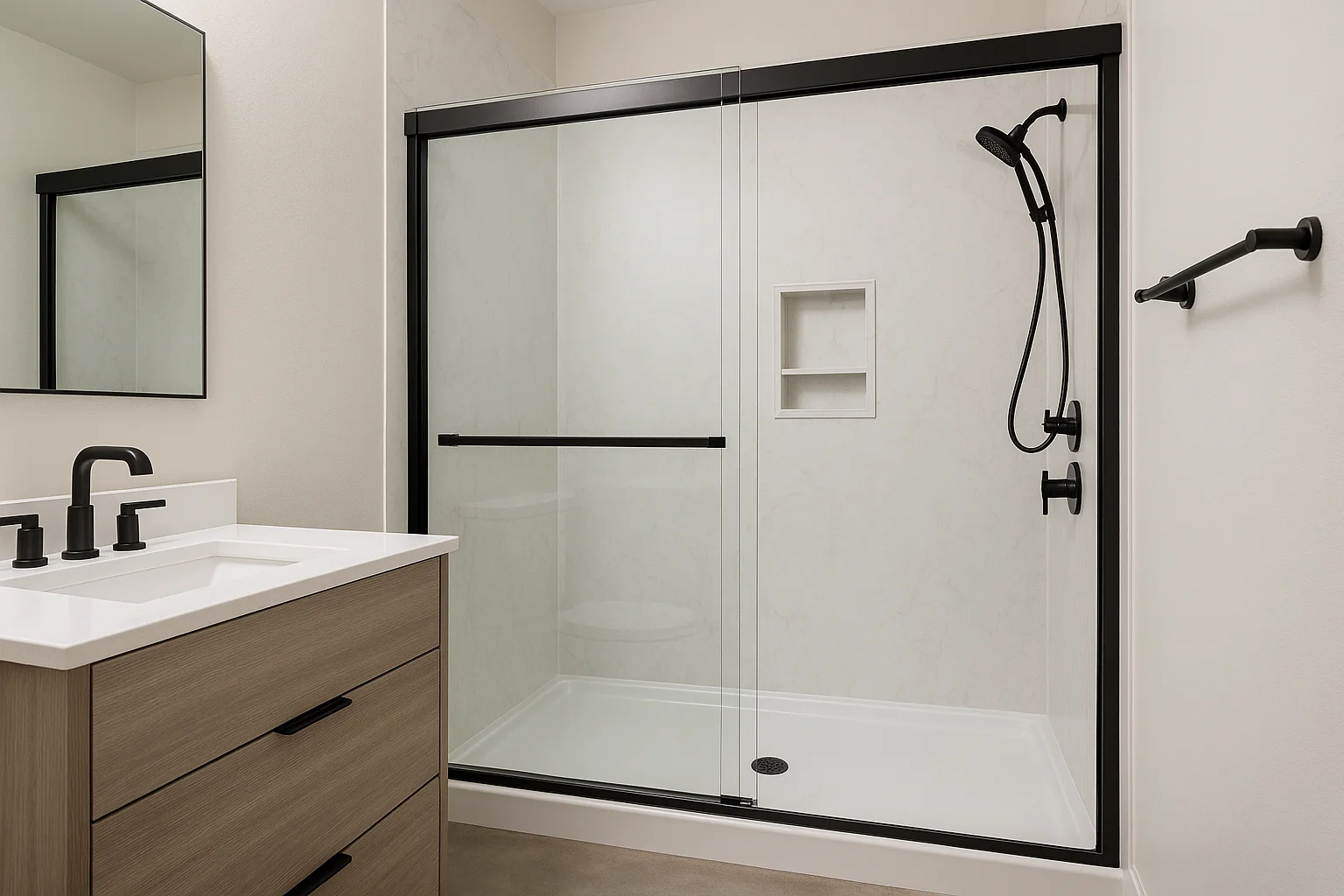
Will removing a bathtub hurt your home’s resale value?
Removing a bathtub is less risky for resale when another tub stays in the house. Removing the only tub carries more risk, because it can narrow the pool of buyers, especially young families. Whether a tub to shower conversion helps or hurts your sale depends on which bathroom loses the tub, who is likely to buy your home next, and whether the new shower is built to code and permitted. None of the sources cited here measure a sale-price or time-on-market penalty for removing a tub. The guidance below rests on national buyer survey data, professional opinion, appraisal rules and local permit requirements.
Quick Answer: Will Removing a Bathtub Hurt Resale Value?
What buyers say about bathtubs
National buyer surveys show a strong preference for having both a tub and a shower in the primary bath, though they don’t measure a resale penalty for removing a tub. NAHB’s What Home Buyers Really Want, 2024 Edition, a national survey of more than 3,000 recent and prospective buyers, found that the top-rated bathroom feature was having both a shower and a tub in the primary bath, which 78% rated essential or desirable. That combination has been one of the top two bathroom features in every edition of the survey. In NAHB’s scale, “essential” means a buyer is unlikely to buy a home without the feature, and “desirable” means the feature would seriously influence them to buy.
Keep two limits in mind when you read those numbers. The survey is national, and it asks about the primary bath, not secondary baths. One appraiser’s view leans the same way. In a 2018 NAR article, appraiser Jonathan J. Miller says he considers at least one bathtub a must, because homes with more amenities appeal to the widest audience of buyers. That’s a professional opinion rather than sale-price data, but it supports keeping at least one tub somewhere in the house.
Which bathroom you convert and who buys next
The same NAR article quotes Stephanie Mallios, a New Jersey sales representative with Coldwell Banker. She says young families with small children are the group most likely to need at least one tub, since many parents consider a traditional tub safer than a shower.
That gives you a practical rule. If your home has two or more tubs, converting one of them leaves a tub for families who want one, so the risk to your buyer pool is smaller. If you’re converting your only tub, think about the buyer who is most likely to want your house. A family with toddlers may pass on it, while an older buyer may prefer a walk-in shower.
How long you plan to stay also matters. If you expect to sell within a few years, for example because of a military move, the next buyer’s needs should weigh heavily, and keeping a tub is the cautious choice. If you plan to stay and age in place, your own safety and comfort can reasonably come first. For a vacation rental or second home, the buyer and resale sources cited here don’t address what rental guests prefer, so a local property manager or listing agent who handles family bookings is the right person to ask.
Is a bathroom with only a shower still a full bath?
A missing tub doesn’t necessarily lower your bathroom count on an appraisal. Under the Fannie Mae/Freddie Mac Uniform Appraisal Dataset Specification v1.1, for listed forms including the Uniform Residential Appraisal Report 1004/70, “A three-quarter bath is to be counted as a full bath in all cases.” Ask your appraiser how your bath will be reported.
How a shower-only bath is entered on the local MLS is a separate question, and your listing agent can answer it.
Why Everyone Says You "Need a Tub" for Resale
Why build quality, permits and inspections also matter
A leaking shower is a problem for any buyer, while a missing tub matters mostly to buyers who want one. A conversion involves more than swapping fixtures, because in unincorporated Escambia County, Building Services lists replacing a bathtub with a shower as work that requires a Plumbing Fixture Permit.
Do you need a permit, and does it matter when you sell?
Permits can matter when you sell, and the rules depend on where you live. Because a tub-to-shower conversion usually involves plumbing, don’t assume a small-project exemption applies. In unincorporated Escambia County, Building Services lists the replacement of a bathtub with a shower as work that requires a Plumbing Fixture Permit. Santa Rosa County explains that HB 803 amended Florida law, effective July 1, 2026, to provide a limited permit exemption for certain residential work valued at less than $7,500, which applies only to single-family dwellings and requires a written exemption request. The county says the exemption does not apply to plumbing work or to any structure wholly or partially within a Special Flood Hazard Area. If you live inside a city’s limits, confirm the rules with that city’s building office.
The City of Pensacola identifies the Florida Building Code, Plumbing as the prevailing plumbing code and says all permitted plumbing work shall be inspected. The city’s FAQ says that from July 1, 2026, non-structural work on a single-family dwelling valued under $7,500 is exempt from permitting, but you must apply for a Building Permit Exemption Application to receive it. Before you rely on that exemption, confirm with the city’s permitting office whether your project qualifies.
Santa Rosa County Development Services warns that unpermitted work may create unexpected issues when filing an insurance claim, selling your property, or completing future renovations. On our projects at Academy, when a plumbing permit is required, we pull it and the work goes through inspection with the local jurisdiction, which gives you a record to show a buyer.

What Buyers Actually Want in Bathrooms Today
Features that widen appeal to older buyers
If your likely buyer is older, or you plan to age in place, a few features make a shower-only bathroom more useful. For single-family homes meant to appeal to older buyers, NAHB recommends a curbless shower with a wide entry, a seat, a hand-held shower option and a chair-height toilet. The same NAHB article suggests using 3/4-inch plywood on the bathroom wall as blocking before the wallboard goes up, so grab bars can be added later. AARP’s aging-in-place checklist recommends a walk-in shower to avoid falling, along with a shower chair or bench, a handheld showerhead, grab bars and slip-resistant strips on the shower floor.
Remodelers report growing demand for this work. In NAHB’s Remodeling Market Index survey, grab bars were the most common aging-in-place project (93% of remodelers), followed by curbless showers (83%), and 76% said requests for aging-in-place features had increased over five years. If you want a voluntary design reference for a low threshold (ADA standards don’t apply to private single-family homes), the U.S. Access Board’s guide notes that a roll-in shower threshold may be up to 1/2 inch high if beveled, though flush designs such as trench drains are easier to use. None of this research shows that these features raise a home’s sale price, but they make the shower suit buyers who want them.
Frequently asked questions
What affects the cost of replacing a bathtub with a shower?
Cost depends mostly on scope: whether the drain or valve has to move or be replaced, tile versus a grout-free wall system, custom glass, any subfloor or wall repairs found once the tub comes out, and permit and inspection fees. After a free in-home consultation, Academy provides a written scope with itemized pricing.
Do ADA rules require grab bars in my home shower?
No. An article on NAHB’s site notes that the accessibility standards of the ADA, the Fair Housing Act and most building codes do not apply to private single-family residences, and it presents grab bars as design ideas rather than mandates. Plywood backing in the walls keeps that option open for you or a future buyer.
Can a tub be put back later?
It can be, but what it takes depends on the space left for a tub, where the drain and valve sit, wall and waterproofing repairs, and whether the conversion changed framing or plumbing. A licensed plumber can look at your drain, valve and wall layout and tell you what it would take.
If you’re removing your only tub and young families are your most likely buyers, keep a tub in another bathroom or talk with a local listing agent before you commit.
Which Bathroom You Remove the Tub From Matters
The impact on resale depends on which bathroom you change. Here’s how the three common scenarios break down.

Location and Buyer Demographics: Who Will Buy Your Home?
Your neighborhood and buyer demographics matter as much as your floor plan. Think about who the next owner of your house will be.
How Tub vs. Shower Really Impacts Home Value

Can a Walk-In Shower or Tub-to-Shower Conversion Increase Resale?
Features that increase appeal to buyers and appraisers:

Mistakes That Really Can Hurt Your Home's Resale Value
Tub removal itself isn’t what kills resale. Bad remodeling is. Here are the mistakes I see cause real damage.
Should You Remodel for Resale Value or for Yourself?
All this comes down to one question: how many bathrooms does your home have, and who is likely to buy it? Answer those two, and the tub-versus-shower decision almost makes itself.
How Academy Construction Helps You Decide: Local Florida Perspective

Our focus is moisture-resistant materials, quality craftsmanship, and finishes that hold up in salt air and humidity so your remodeling investment supports long-term home value. You can see examples of our work on our project gallery.